
Sorcha Lewis watched the wildfire descend from the uplands to the back of her house.
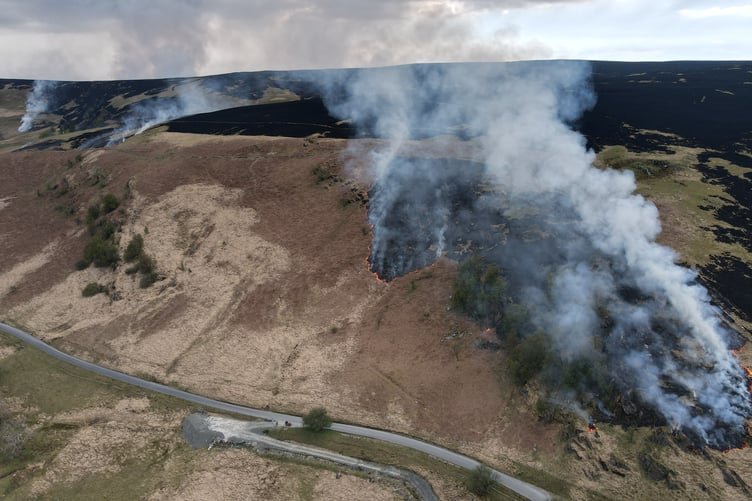
The end-of-April fire was on an unprecedented scale, visible from space, tearing through 8,000 hectares of Elan Valley’s rare and delicate natural habitats in seven days, burning the equivalent of more than 11,000 football pitches.
The cattle and sheep farmer said she knew the fire would be big, but the scale of the fire was “frightening”, hearing the “roar” of the flames “like a wave”.
.jpeg?trim=217,0,219,0&width=752&height=501&crop=752:501)

Sorcha became “emotional” watching the land she calls home burn around her, but there was one distinct area that the wildfire didn’t touch.
Drone footage shows a striking line from the black burnt land and a blush of green and blue showing the pools of watery peat.
This is one of the areas where, only 18 months ago, peatland rewetting began.
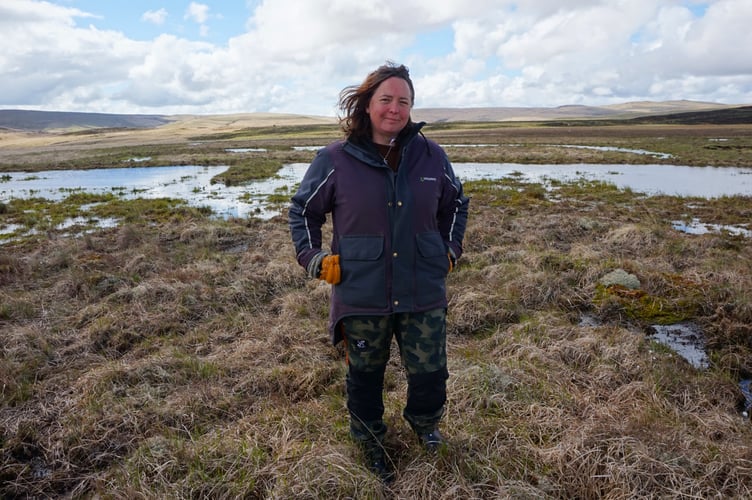
The 50-year-old mum of two said: “It shows the devastation of the wildfire, but also the potential to avoid that dramatic, frightening, landscape-scale wildfire.
“Restoring peatland makes the land more resilient to climate factors - when it rains too much, it soaks it up. When you’ve got wildfires, it can stop the fire’s movement by just being damper ground.
“This is why, as farmers, we need to get into the mindset of making the landscape resilient, because if it’s resilient for nature, it’s resilient for farming.”
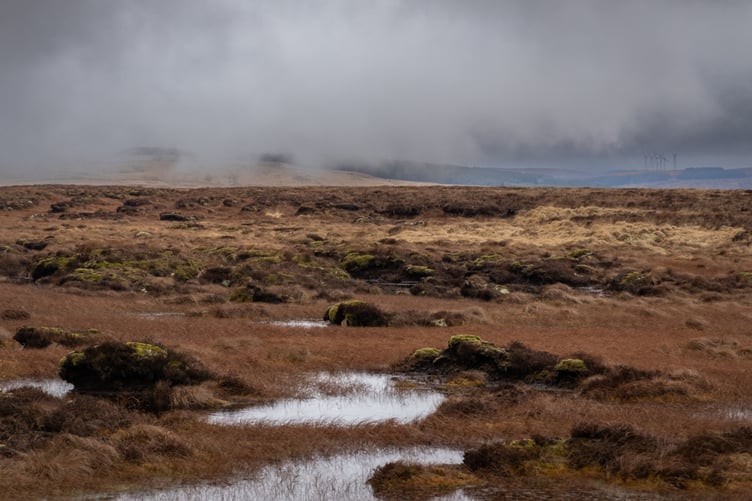
Peatland rewetting involves creating small dams to encourage water to collect, rewetting the once wet peat, allowing plants like moss to recover, and creating a “sink” for water in the uplands of the 70 sq mi estate.
Peatland is made of partially decomposed plants that have accumulated in waterlogged conditions, offering a unique habitat for an incredible range of rare plants and wildlife.
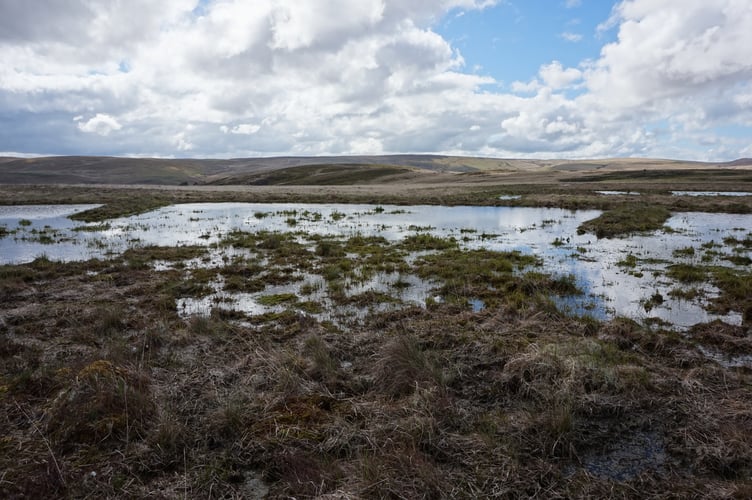
When healthy, peat is a precious carbon sink, so significant in fact that peatland is sometimes referred to as the world’s air-conditioners, with undamaged peat holding thousands of years' worth of carbon.
Damaged peat, meanwhile, releases carbon back into the atmosphere and, when fire catches, can burn for months underground.
Wales’ peatland is significant, covering just 4.3 per cent of Wales (90,000 hectares) but holding 30 per cent of the country’s land-based carbon, but 90 per cent of the peat is damaged, drained for agriculture and forestry or harvested to make compost.
Work to restore and protect it is only just beginning - the Elan Valley Trust started its work five years ago with support from Natural Resources Wales (NRW), restoring 180 hectares of the estate across five priority sites.
The Estate recognised those areas as being most resilient against April’s fire.
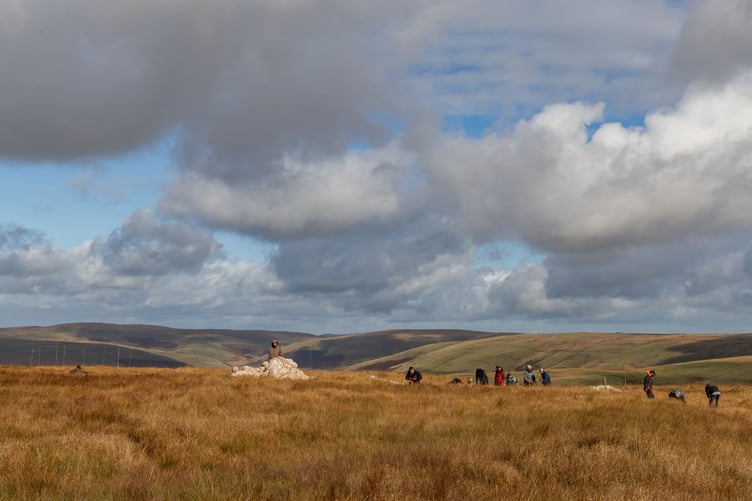
In 2020, NRW also began restoration work on 3,600 hectares of peatland, and is now aiming to begin restoration on 1,800 hectares more each year.
Sorcha, whose family has been on her farm for three generations, is part of a growing movement of farmers working to restore their peatland, using wool from her own sheep as repair materials.
She is calling for incentives for farmers and landowners to restore their peatland: “Hopefully, after this wildfire, it’ll give us some leverage for the practical conversations about how we can stop it at that level again.
“Living within the wall of the fire, we don’t want to see a fire like that ever again.
“As farmers, we want to leave something behind when we finish.
“This feels like a positive in a world that sometimes feels quite negative.”
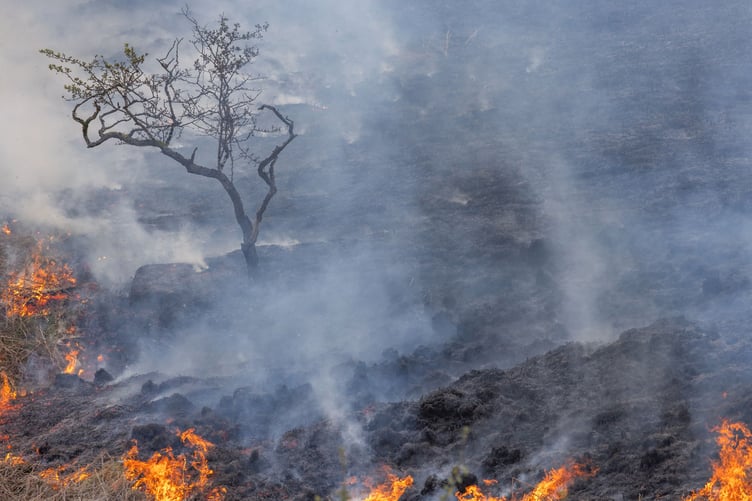
Wildfires are getting worse in Wales. Sorcha’s family can’t remember the last time they saw a fire in the Valley, but 2018, 2025, and now 2026 are examples of an increasing trend of wildfires spreading throughout the country.
In 2025, 20,000 hectares of Welsh landscape burned.
Sorcha, like other tenant farmers in the Elan Valley, had warned that the next wildfire would be big due to the dry weather, high winds, and the increase in native Molinia Caerulea or ‘purple moor grass’ which, highly flammable and encouraged by previous wildfires and is increasingly dominant in the landscape.
Peatland rewetting isn’t a one-strike solution for wildfires - some parts of the Valley affected don’t have peat, and the increasing molinia “fuel load” still needs addressing.
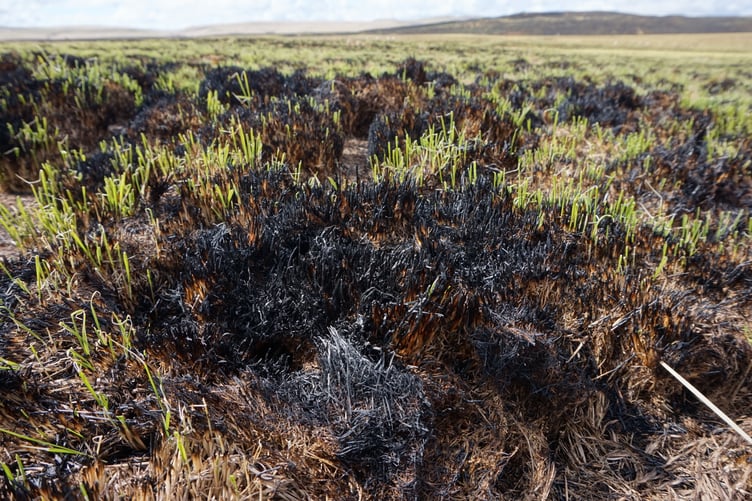
Solutions being explored include active grazing and mowing fire breaks into the landscape.
The Elan Valley Trust plan to expand its peatland restoration work, and is exploring other means to protect the landscape from devastating fires, with a spokesperson adding: “There are many factors which play a role in how and where wildfires spread; therefore the Trust is working with organisations and the local community to consider a holistic approach to reducing the risk.
“We are also hoping to raise public awareness of the human impact of litter, driving off the legal routes and barbecues/fires - all of which present a fire risk.”
Wales is lighting up
Mid and West Wales Fire and Rescue Service admitted they didn’t know the cause of the wildfire, and fire services rarely do.
But the pattern of wildfires across Wales is increasing - 2025 saw 3,474 grass fire incidents, a 275 per cent rise from the previous year.
Troublingly, so is the pattern of deliberate grassfires, with 2,357 deliberate grass fire incidents last year, which the Wales Wildfire Board described as “a deeply worrying trend that puts people, property, wildfire, and vital community resources at risk”.
Elan Valley is home to reservoirs which provide water to the entire city of Birmingham and some parts of Wales, but is also home to rare wildlife like merlin, dunlin and golden plover.
It is estimated that 90 per cent of wildfires globally are caused by humans, 70 per cent of which are accidental, from controlled burns on the landscape gone awry, to bonfires that aren’t extinguished properly, to machinery, electricity, cigarettes and litter.
It comes as only last week, the independent Climate Change Committee said the UK is not ready for the impacts of rising temperatures if global heating continues, and the Fire Brigades Union warned this could push services “past breaking point”.
The independent Climate Change Committee forecast deadly heatwaves, droughts and flooding if adaptations aren’t put in place, describing hotter summers as the “new normal” - the 10 hottest years on record all having taken place since the early 2000s.
According to their citizens panel, people want to see authorities using solutions that have co-benefits, including nature-based solutions such as peatland restoration, which benefits nature, climate, and residents protected from flood and fire risk.
“What my cows are doing is really interesting”
Hywel Morgan watched the molinia grass increase on the common land he grazes on Mynydd Du and knew he had to do something about it.
The eleventh-generation farmer knew his sheep wouldn’t eat the molinia, which dies back in winter, leaving a thick thatch of dry material.
He said: “When I took over the farm I could see the mountain getting tougher and tougher for sheep grazing. The molinia was taking control. I felt like we had to do something.”
Having previously worked with the fire brigade and National Park wardens to do controlled burns, he felt that method was “ridiculous”: “We’re using fire as a tool when livestock is the solution. We needed cows on the common.”
Five years ago he applied for a change of license to graze cattle there instead: “Instantly I could see the benefits not just for me and my livestock system, but for the habitat and fire load.
“They create a diverse habitat and landscape, and improve grazing for the sheep.”
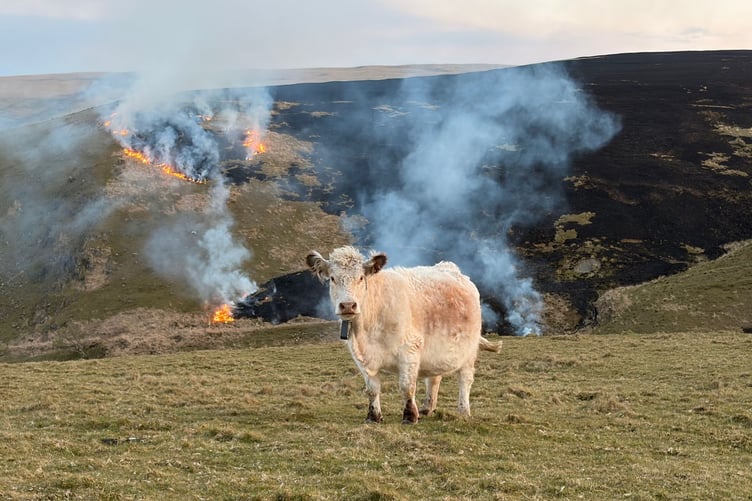
The 55-year-old grandfather showed the authorities that targeted grazing cut back molinia, allowing other species to grow and providing more feed for sheep.
Hywel said: “The moment that sticks in my mind is when I hosted the fire brigade, councillors, NRW, all sorts of organisations for an open day.
“The guy from the National Park pointed to the previous fire risk right by the forestry, and recognised how much I’d done in those few years.
“It’s a win-win.”
He is now calling for the Welsh government to recognise active cattle grazing as a solution to the increasing wildfire problem.
“Mosaicing the land is the key to success”
Ifan Davies, the sustainable farming officer for the Nature Friendly Farming Network (NFFN), says multiple approaches are needed.
The sheep and cattle farmer near Carno called for joined-up thinking to prevent wildfires.
He describes the peat bog on his land as “very important”, providing the drinking water for his entire farm: “I don’t want bogs everywhere, but concentrating on holding water in the uplands provides water for the animals and slows down any potential wildfire.
“If you’ve got swathes of one type of grass like molinia, fires spread very fast, so mosaics everywhere is very important as a preventative strategy for fire risk.”
He spoke of small wildfires hitting his land, which were stopped from spreading because of the “patchworks of land” he’s cultivated.
He also does rotational grazing with his stock, which allows the soil and plants recovery time between grazing, improving root quality and, in doing so, water absorption into the soil.
This doesn’t just provide better yield of feed for his animals, but helps retain moisture to slow down water that could contribute to flooding, and protects the landscape from wildfires through damper soil and more resilient grasses that won’t die back as quickly in the heat.
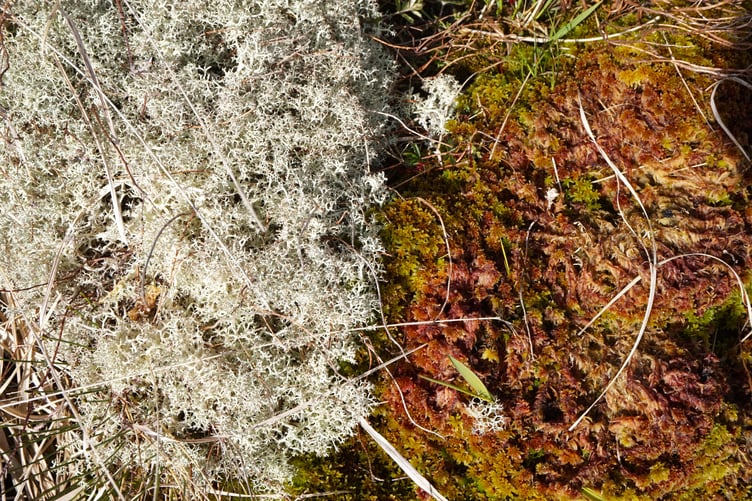
He is calling for other farmers to think differently about their land: “Biodiversity is key.
“It may not tune into some people’s thinking, but it’s in everyone’s interest.
“The extremes that we’re enduring at the moment tie into sustainability.
“A lot of my activities on the farm are for the long term.
“On a business level it's about making your business sustainable, spending all winter trying to get rid of water and spending all summer bringing it back on just increases the work.
“I think people are going to start seeing the advantages soon and more people will jump on board.”
NFFN is a membership organisation supporting farmers wanting to “restore balance between farming and nature” through knowledge sharing.
Meadows with more diversity improve resilience to drought
A tenant farmer on the Llŷn Peninsula found that his restored hay meadows stayed green during periods of drought, when his monoculture fields of rye and clover turned yellow.
Carwyn Evans, farmer at the National Trust’s Cwrt Farm, trialled meadow restoration as a pilot that would become the recently launched Welsh government Sustainable Farming Scheme.
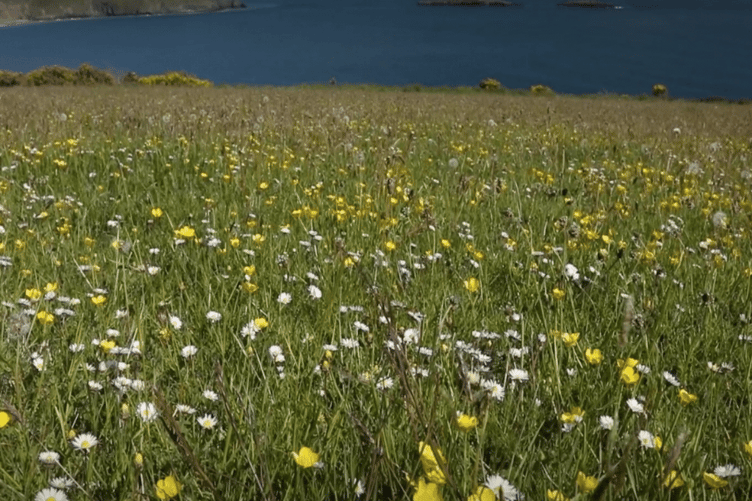
By increasing the diversity of plant species in the fields, moving away from typically used fattening silage crops, and changing the rhythm of cutting and grazing, meant other plant species were able to grow, returning the fields to what a more traditional hay meadow used to contain.
These changes increased the plants' root depth to two metres, so the fields retained moisture whilst the neighbouring fields dried out.
He also found his livestock needed fewer synthetic wormers after grazing on the restored meadows, adding: “I used to think hay meadows were a waste of time and space, as we just wanted to make as much silage as possible.
“Now I see how they fit into the bigger picture - every part of the cycle needs looking after because there’s a knock-on effect, for example, pollinators, which are important on the farm.
“Farming and nature need each other. Without one, you won’t have the other.”
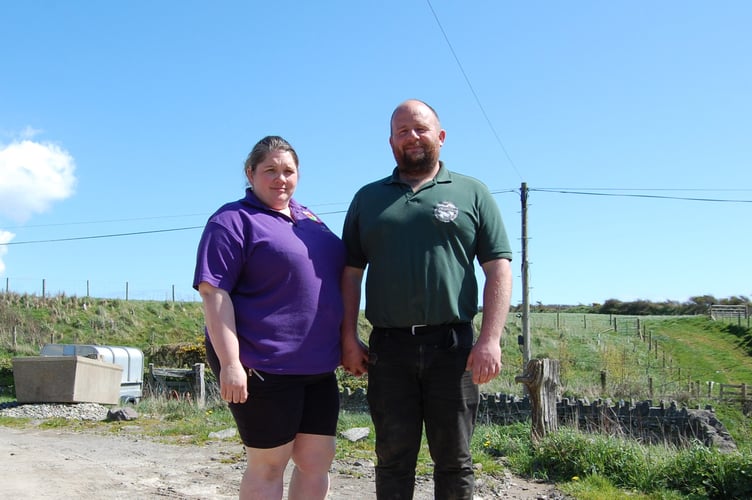
The new Sustainable Farming Scheme incentivises farmers to do similarly to Carwyn, a move welcomed by the Mid and West Wales Fire Service, which called for the Scheme to be leveraged to “embed wildfire prevention into everyday land management practices”.
Speaking to Sorcha on the uplands by her home, above the skylark singing over the bog, she said she wants to capitalise on this moment for good: “We look after our stock, we look after our farms, we're business people, but there's nobody that doesn't want to leave something good in what they've done in life.
“Living in this precious landscape, this is an opportunity to get things right.”
Comments
We've recently changed our login process. If you have an account for commenting, you will need to re-register on the login window.
This article has no comments yet. Be the first to leave a comment.