
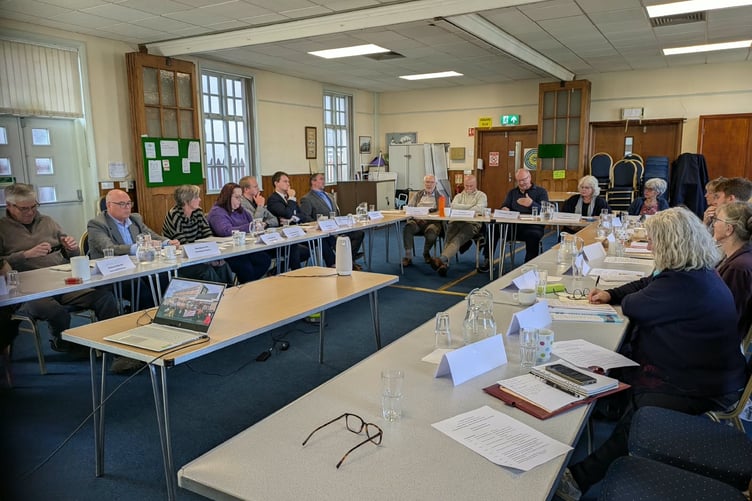
Campaign groups from across mid and north Wales met in Penparcau to collectively call for a better health service for rural areas.
The meeting was organised by Protect Bronglais Services and involved campaigners from Tywyn and across Powys along with a raft of Welsh MPs and MSs.
The Mid Wales for a Mid Wales Health Summit was held in Penparcau on Saturday 17 October.
The summit comes after a Hywel Dda University Health Board consultation on proposed changes to stroke services at Bronglais Hospital, alongside threatened cuts to community hospital beds in Machynlleth, Llanidloes, Welshpool and Llandrindod Wells.
Campaigners from Tywyn have also been fighting for three and a half years to get Dyfi ward at the town’s hospital after it was ‘temporarily’ closed in April 2023.
PBS warns the changes could increase further the pressure on Bronglais, Mid Wales's only district general hospital, in particular with regard to removing step-down care facilities from community hospitals and MIUs which will put further pressure on both the front door and the back door of Bronglais, Mid Wales’s only District General Hospital serving four counties.
PBS has also become increasingly concerned at the lack of response from Welsh Government over the future of Bronglais and its development as an exemplar rural district general hospital.
With Hywel Dda UHB facing serious financial and planning difficulties and community hospital beds and facilities under threat across wider Mid Wales, the group says health and care services in the region are "tipping into crisis".
Furthermore, in terms of removing beds from community hospitals – and it is nothing short of disgraceful that this has already happened by stealth in Tywyn, Meirionnydd, Powys Teaching Health Board cannot confirm that they will have a sufficient army of mobile carers to fill the deficit by providing care in people’s homes, so once again they are proposing to remove services before indicating how they intend to replace them. As always seems to be the case, these proposed changes will affect our elderly and vulnerable the most.

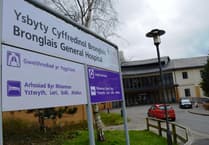
PBS says rural communities cannot afford to lose essential local services when patients already face journeys of up to three hours for hospital appointments, often with no direct public transport link.
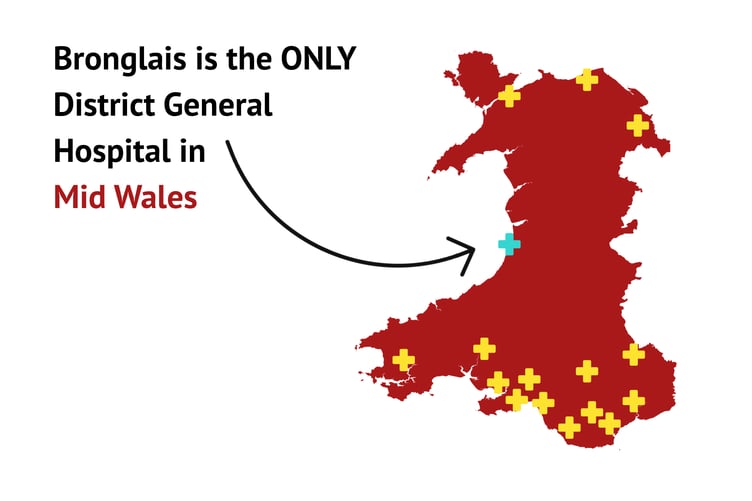
Bronglais Hospital serves patients from three different health boards, yet decisions often appear to be made in isolation, without sufficient consideration of their impact on wider patient pathways. Bronglais does not just belong to Aberystwyth or Ceredigion; our hospital belongs to the people of Mid Wales – ‘Calon y Canolbarth’. An individual's care pathway frequently crosses both geographical and organisational boundaries — which, PBS says, makes collaborative working between service providers essential.
Speaking from the summit, PBS Chair Lisa Francis said: “At present, organisations such as the Mid Wales Joint Committee for Health and Care and the Regional Partnership Boards pay lip service to that commitment while the lived experience of patients is very different. Whilst Bronglais patients come from three different health board areas, they seemingly operate in silos and there needs to be far more joined-up thinking.”
Rural populations, urban models
PBS argues the real challenge for Mid Wales is how to deliver the very best for its whole population, not how to squeeze the population into models which really can only work in urban settings for health and care. Highly specialised services will never be local for rural populations; there needs to be an open acknowledgement of geographical constraints — with often difficult access to private transport, truly awful public transport, and national guidelines built for far higher population densities — it is essential to plan services that will actually work.
Lisa continued: “There are innovative ways of working around the geographical constraints; the Welsh Government needs to look at training, technology and novel solutions - our community hospitals could certainly be used as ‘Health Hubs’ for example, where digital technology, video link-ups and outreach clinics with visiting consultants could be held, as well as regular clinics like ante-natal clinics and blood clinics, etc.
“Training programmes for our medics are almost always based in urban hospitals and therefore doctors end up being trained for urban centres, when what rural areas need are skilled generalists who are then able to add a subset of specialist skills. Remote consultation, shared diagnostics and video examination can extend specialist advice into rural settings, within limits.”
PBS does not believe the answer is for each health board to consider these issues in isolation. It recognises that individual health boards have their own responsibilities and says it will continue to respond constructively to their consultations. But the issues facing Mid Wales cross organisational boundaries and require an urgent response from Welsh Government at both national and regional level.
Speaking after the summit, Lisa Francis said: “We are very pleased that everyone who attended signed the declaration – this augurs well for the future and for the politicians who were in attendance, be assured we will hold them to it.
“I am aware that the Health Minister Mabon ap Gwynfor recently made a statement to the Senedd regarding a new framework for monitoring health and care services – he stated that current legislation only allows him to go so far in holding health boards to account. Similarly, on intervening on proposed Health Board service changes which are clearly detrimental to people in Mid Wales, the Senedd’s own Legal Adviser, the Counsel General has stated that powers of intervention can only be enacted if they relate to failure of governance, failure of performance and the exercise of functions by health boards.
“That said, we know that in the past in Wales there has been a precedence for ministerial interventions: Edwina Hart, Mark Drakeford and Vaughan Gething to name but a few.
“I think that this might be a case of finding the political will to do it! In the same way, if legislation needs to be changed so that we are on a par with England and Scotland, where ministers with responsibility for health can ‘call in’ proposals or give their approval to major service changes, then let’s make that happen. For years successive Welsh Governments have whinged on about not having appropriate powers; actually they now have the power and it’s high time the legislation reflected this. If legislation needs changing – so be it!”
The meeting concluded with those present signing a declaration calling on the Welsh Government and the Minister for Health and Care to act now to secure a health service that is designed around the needs of the people it serves.
Five points are put to the Health Minister, Mabon ap Gwynfor MS, which are:
1. Put people at the heart of decision-making: Require the lived experience, views and priorities of patients, carers and communities to be demonstrably taken into account when services are designed, changed or withdrawn — not simply consulted upon after decisions have effectively been made.
2. End the silo approach to mid Wales: Require Health Boards and other NHS organisations to work together across their boundaries. The health and social care needs and journeys of people in Mid Wales do not stop at organisational boundaries.
3. Establish one clear point of accountability for the entire health and care system.
4. Test every service change against the needs of mid Wales: Require the cumulative impact of proposed changes to be considered — including access, travel, transport, workforce, primary care, community services, social care, carers and the ability of people to receive care close to home.
5. Be prepared to deliver real and effective change: The system is not working effectively and our Welsh Government needs to be open to meaningful, system-wide change – including legislation – instead of merely undertaking superficial adjustments to existing arrangements and processes which will not actually improve core outcomes.
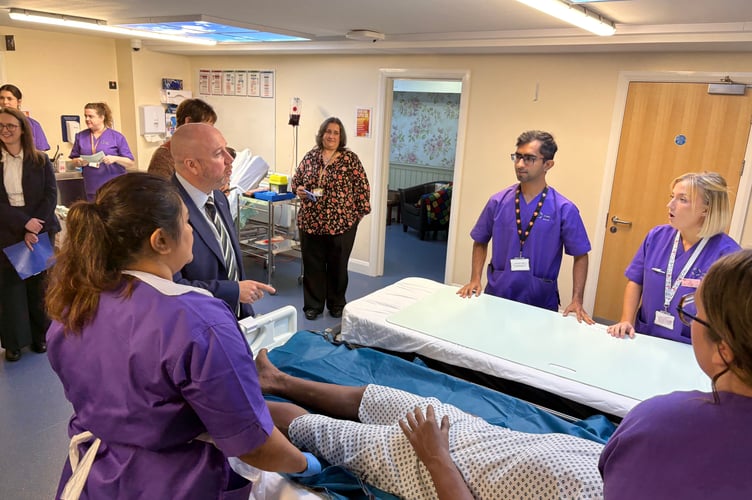
The Cambrian News asked Mr ap Gwynfor about the declaration when the minister was in Aberystwyth last week celebrating more than 250 nursing graduates securing posts in NHS Wales since June.
“Healthcare is changing in rural Wales. We know demographics are getting older, we know that the demand is going to increase, and we know that we need more nurses in the community.
Reacting to the message from campaigners, he added: “What we are trying to do in government was reflected in what they were saying.
"Absolutely, we need to break down those silos, not just within government but across Wales, breaking down the barriers between health boards. So currently, you know, we've got—in this area you've got Beti Cadwaladr, Powys, and Hywel Dda.
"Historically, they've been sort of standalone organisations. We need to make sure that they collaborate more for the benefit of patients.”
When asked about the Longley report which was released more than a decade ago, calling for a centre of rural healthcare excellence, Mr ap Gwynfor said: “One of the things that Marcus Longley was referencing was the need to develop a centre of rural health excellence. So I've started and initiated that now.
"I've spoken quite a bit that we need to see Bronglais developed as such a centre of excellence. I've had those conversations with the health board, so that is something that is now on the agenda.
"Clearly, it's not going to be something that's developed overnight. It's going to take a while in order to get it set up properly, so that we are taking into consideration the need for cross-border working.
"But absolutely, Longley's report is still relevant and it's still being considered.
“If you look at how they've developed rural healthcare in Western Australia, that's the kind of model we need to look at.”
Asked whether there needs to be a reorganisation of health boards, Mr ap Gwynfor said: “As things stand, we have to work with the boards that we've got, because any change to the health boards will take a long, long while to do.
“The public, need confidence that they are accountable for actions that are taken. But in the long term, who knows.”
Ceredigion Penfro MS Paul Davies, who signed the declaration, said: "Having spent years fighting to protect services at Withybush Hospital, I recognise only too well what's happening here. Communities are being left worrying about the future of services they depend on, while decisions are being considered that could have consequences far beyond one hospital.
"Bronglais serves patients across several counties and health board areas. You cannot make changes to stroke services or cut community hospital beds without looking at what that means for the whole region.
"For some patients, accessing alternative services can mean hours of travelling. That's simply not good enough, particularly for older people, vulnerable patients and families who rely on public transport.
"One of the clearest messages from the summit was that people are fed up with decisions being made in isolation. Patients don't care which health board is responsible for a service. They want to know they can access treatment when they need it.
"The Welsh Government cannot simply leave individual health boards to deal with these issues separately when the consequences are felt across the whole of Mid Wales.”
Plaid Cymru MS Elwyn Vaughan, who attended along with Ben Lake MP, Anna Nicoll MS and Kerry Ferguson-Jones MS, said: “We’re asking to work with health minister for a positive way forward and making Bronglais the heart.”
On the issue of health boards being held accountable for decisions, Mabon ap Gwynfor told the Cambrian News: “Last month, I announced the new escalation frameworks so that we've got greater transparency, earlier intervention when things—before things go wrong. So we've started on that now to improve accountability in the health boards.
“We need that conversation about what is the best setup for health provision in Wales.”
On the issue of hospital transport, Mr ap Gwynfor said it was something that concerned him and that he is working with transport minister Mark Hooper to develop services.
Speaking on graduate nurses gaining employment, he added: “I’m really pleased to be meeting some of the nursing graduates in Aberystwyth who are now embarking on their careers with NHS Wales.
“I fully recognise how worrying the situation has been for newly qualified healthcare professionals waiting to start their careers. The progress we've made since the Graduate Summit shows what can be achieved, but there is still much work to be done, especially for midwifery graduates, and we remain committed to helping graduates into employment and retaining their skills within NHS Wales.”
Comments
We've recently changed our login process. If you have an account for commenting, you will need to re-register on the login window.
This article has no comments yet. Be the first to leave a comment.