
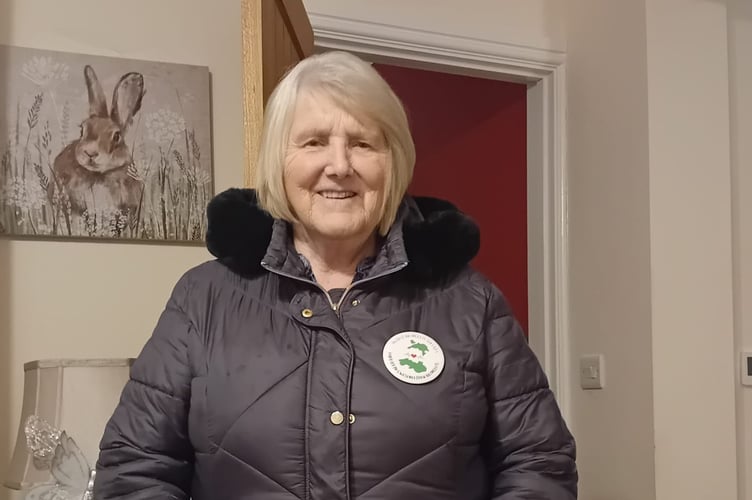
Brendan Somers said it is thanks to Bronglais’ stroke unit for being able to walk and talk today.
In March 2024, he fell to the floor at home, going from shaky to incoherent: “I was seen immediately, which was vital, and treated exceptionally well.
“They were terribly professional, dedicated and supportive.

“They supported my family - that was the important thing, having those people around you, your support network.
“It’s as important as the medication itself.”
The 77-year-old former Aberystwyth mayor is concerned with plans to downgrade Bronglais’ stroke unit to a ‘treat and transfer’ unit.
This would mean patients would be brought for initial emergency treatment before being taken onto a hospital in the south for interventions and rehabilitation.
Next week, Hywel Dda University Health Board will decide on the fate of healthcare services after stating that services could not continue as they are.
After his initial care in Aberystwyth, Brendan was transferred to Morriston’s Hospital in Swansea, where he found the staff “unhelpful” and felt “forgotten about”: “This is why I strongly feel the unit is quite frankly excellent and should be retained in full capacity.
“’Treat and transfer’ sounds like treatment of chemical waste, not a patient.
“Everything is based in the south - if you live in Aberystwyth or south Gwynedd, you have to travel a hell of a long way in infrastructure that is poor.”
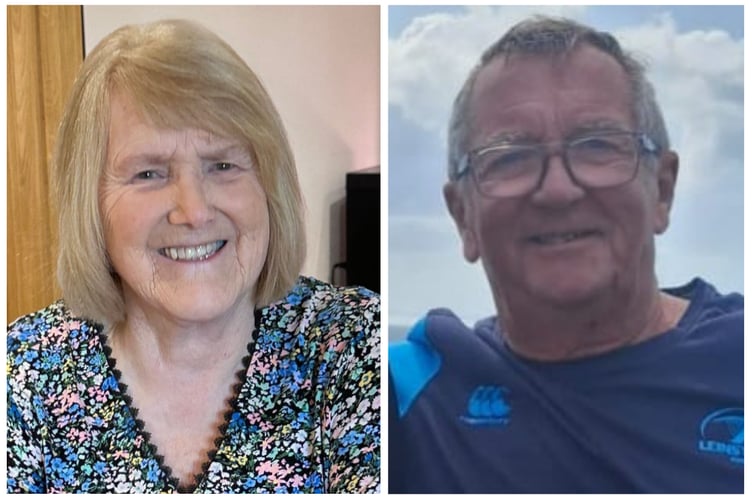
Ruth Davies, 83, survived a TIA stroke in August 2020, said she “was one of the lucky ones” living so close to Bronglais: “There’s a possibility I wouldn’t be here today if it wasn’t for Bronglais staff’s swift action.”
She was transferred to Swansea for surgery, but says she wouldn’t recommend the journey: “It’s not comfortable being in an ambulance for 2.5 hours, I can tell you.”
She, too, is concerned for patients who would be away from loved ones in the south: “I don’t know why they think they can do this to Aberystwyth.
“Bronglais is the only hospital here [in mid-Wales].
“How will the hospitals in the south cope with us from here as well, when they’re already stretched?”
Lee Davies, Hywel Dda Director of Strategy and Planning, said that evidence from other clinical models shows safe transfers are achievable, with Bronglais already doing this for trauma, cardiology, and stroke thrombectomy pathways through a dedicated ambulance vehicle, adding: “Suffering a stroke can be devastating for patients and their families.
“The evidence is clear that changing the way stroke services are delivered can save lives and improve patient outcomes.
“Under all options being considered, initial diagnosis and potentially life-saving thrombolysis treatment would continue to be delivered at all four acute hospitals within the Hywel Dda area, including Bronglais Hospital.
“ We have carefully considered how proposed changes could impact transport for patients and loved ones, and staff.
“Some options may involve longer travel times for some people to ensure they access better quality care.”
Comments
We've recently changed our login process. If you have an account for commenting, you will need to re-register on the login window.
This article has no comments yet. Be the first to leave a comment.