
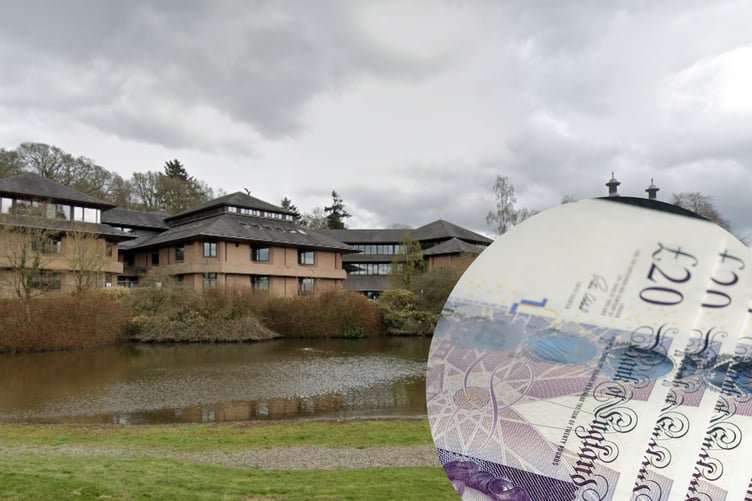
Higher council tax premiums on long-term empty properties could bring an extra £1.5 million into Powys council coffers, a councillor has said.
At a meeting of Powys County Council’s cabinet on 22 September, councillors received the contents of a consultation on proposals to increase Council Tax premiums on long-term empty properties.
There are currently 897 of these long-term empty properties in Powys.
In 2023, the Welsh Government expanded the discretionary powers available to local authorities, allowing significantly higher premiums of up to 300 per cent to be charged on long-term empty properties.
Over the summer, a consultation has been held on proposals for “stepped increases” in council tax premiums that could come into force from April next year.
Currently, the council charges a 100 per cent council tax premium on all long-term empty properties, but if the proposals are adopted this could change from April next year.
A property that has been “continuously empty” for between one year and five years would remain at the 100 per cent premium level.
For those “continuously empty” for between five and 10 years, a 200 per cent premium would apply.
Properties “continuously empty” for 10 years or more would be subject to a 300 per cent premium.
The report shows that 368 people offered their views during the consultation period, which took place from 8 July to 19 August.


A clear majority of 51.1 per cent of respondents favoured the stepped premium approach, while 41 per cent wanted the premium to remain as it is.
The consultation also showed that 61.3 per cent of people said that long-term empty properties had a negative impact on Powys communities.
Finance portfolio holder Cllr David Thomas explained that the point of the proposal is to encourage the owners to bring their properties back into use or sell them to “increase housing availability in the county.”
Cllr Thomas said: “The incremental approach is intended to ensure the level of premium is proportionate to the length of time they remain empty.
“This approach may encourage owners to take action to reoccupy or dispose of the property.
“Should full council approve the changes, the proposal has the potential to generate an additional £1.5 million per annum based on current property numbers and allowing for an estimated collection rate of 85 per cent.”
But he warned this figure could drop if properties are brought back into use.
Deputy council leader and housing portfolio holder Cllr Matthew Dorrance said: “I’m definitely supportive of the proposal.
“The flat approach that we took clearly mitigated some of the challenges we have around long-term empty properties, and I think moving to the stepped approach will deliver greater impact for us as a council.
“The stepped approach is about ensuring that the worst offending properties carry the bigger burden.”
He added that it was an “important signal for us” that the policy is linked with affordable housing policy and that bringing these properties back into use would help meet “housing challenges.”
Comments
We've recently changed our login process. If you have an account for commenting, you will need to re-register on the login window.
This article has no comments yet. Be the first to leave a comment.