

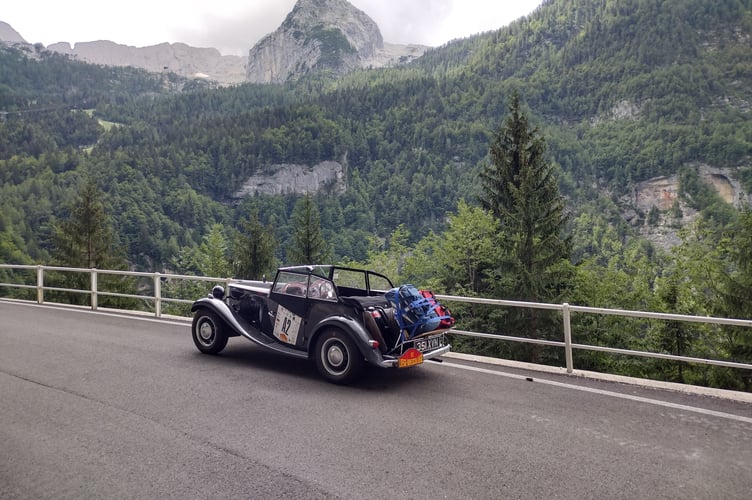
Maybe it’s the classic outline. The sleek styling. The purr of the petrol engine as they were before sensors and modules, computers and chips changed the way our vehicles drive.
The lure of classic cars is a draw for so many. And that’s why Tim Winton, the founder of Cambrian Classics - a family-run business that specialises in pre-1980 classic and vintage car repair and servicing – is the go-to man in mid and west Wales.
He also runs the local MG Owner’s Club, has explored some of the most beautiful driving roads west Wales has to offer and made a hobby of taking elderly vehicles on European adventures – from driving MGs through France, Italy, Spain and Portugal, to shipping a 30-year-old Land Rover campervan to Iceland for a summer trip, clocking up over 15,000 continental miles in vehicles averaging 40 years old.





There’s usually an interesting personal restoration project in the corner of Tim’s workshop, and his company offers services that range from restoration and repair work to regular servicing and maintenance.
“Owning a classic car is about more than nostalgia – it’s about the experience,” he tells Cambrian News. “It’s the anticipation of a weekend drive along a quiet country road, the camaraderie of a club run, or the thrill of exploring distant landscapes in a vehicle that was built decades ago.
“But to fully enjoy these experiences, preparation is key, not as an end in itself, but as a means to ensure the car serves its purpose: to be driven and enjoyed.
There are countless ways to use and enjoy your classic car and it’s important to decide what you enjoy. Some people love socialising at shows and exhibiting their cars. Others prefer scenic tours, navigation rallies, or using the car to attend larger events they will be spectating at.
Work out what you enjoy and maximise the car around that.
“Bear in mind that some activities are harder on the car than others,” Tim cautions. “A 200-mile night rally will test a car far more than a 100-mile daytime scenic tour. Track days and trials events push cars beyond normal road limits and will expose weak components.”
But there is a philosophy here: use it, break it, fix it. Cars often become more reliable once they’ve been properly exercised and sorted.
Preparation isn’t merely about safety; it’s about peace of mind. Whether it’s for a weekend away at an event or a longer road trip, simple checks can prevent frustration and preserve the pleasure of the outing.
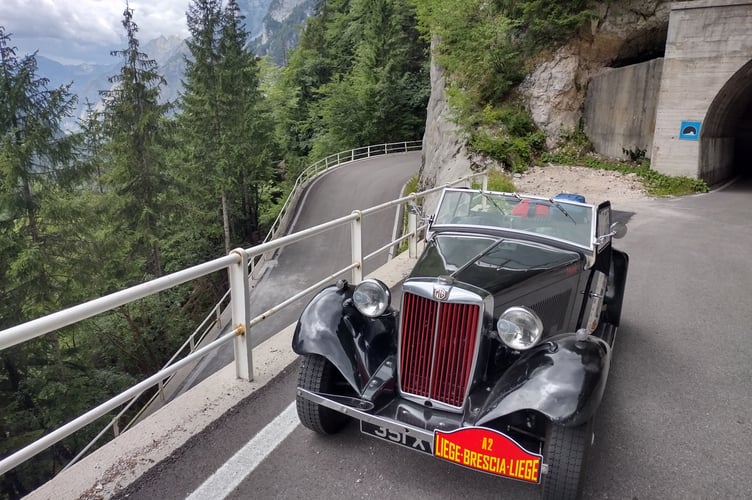
“Before a long journey, it’s worth doing an oil change and service so you’ve got fresh oil in it,” he says. “Make sure your tyres are in date and in good condition, and that all the lights work.
“If you’re planning a long road trip, try driving it at night close to home first. Many owners drive their cars for short periods, and consequently they don’t know how healthy the dynamo or alternator is, or even whether all the lights work. With vintage cars the lighting output might only sustain a couple of hours’ night driving before draining the battery if the dynamo isn’t powerful enough,” he says.
He knows what he’s talking about.
“On the Liège Rally, for example, once we reached Slovenia—where regulations require daytime running lights—cars were running their lights all day. On the first night, we had to change three alternators and dynamos because they simply hadn’t been stressed like that before,” he says.
So, it’s important to stress-test the car. Do a medium-length local trip before attempting a continental one. It’s much easier to iron out issues at home than in another country where you don’t speak the language.
Before any major trip, it’s worth having a professional inspection, especially if you don’t have access to a lift. Even if you’ve looked over the car yourself, seeing it from underneath on a ramp can reveal surprises.
Rubber components are a common weak point – heater hoses especially. Flex them. If they crunch or feel brittle, replace them. Rubber deteriorates with heat cycles and age.
“It’s always worth carrying a good selection of tools when you are going further afield: a proper spanner and socket set, screwdrivers, and ideally a multimeter. It sounds obvious but make sure the sockets and spanners you pack actually fit your car. People forget that not all tools fit all classics, and an ‘off-the-shelf’ kit may not work for you.
“There are different imperial standards—old British imperial (Whitworth) and SAE imperial—and they’re not interchangeable,” he cautions.
Carry a jack, wheel brace and a torch or suitable lead lamp. If you have a 6-volt car, don’t expect a 12-volt inspection lamp to work properly; use equipment suited to your car’s voltage.
“If your car runs conventional ignition - points and condenser - take spares. Having points, condensers, distributor caps and rotor arms to hand can get you back on the road quickly. If you have electronic ignition keep a spare set of points in the glovebox just in case.
“Electronic systems such as CSI or 123 distributors are generally more reliable, but nothing is infallible. Conventional ignition components remain the weakest link in many pre-1980 cars,” he says.
Oil can also be difficult to source abroad, particularly classic-grade oil. In France, for example, it’s available but can be expensive.
“Take a couple of litres with you, especially if your car is known to use some oil – and expect it to use more than usual on long motorway stretches,” he says
If your car runs inner tubes, carry a spare tube. Also check your spare wheel.
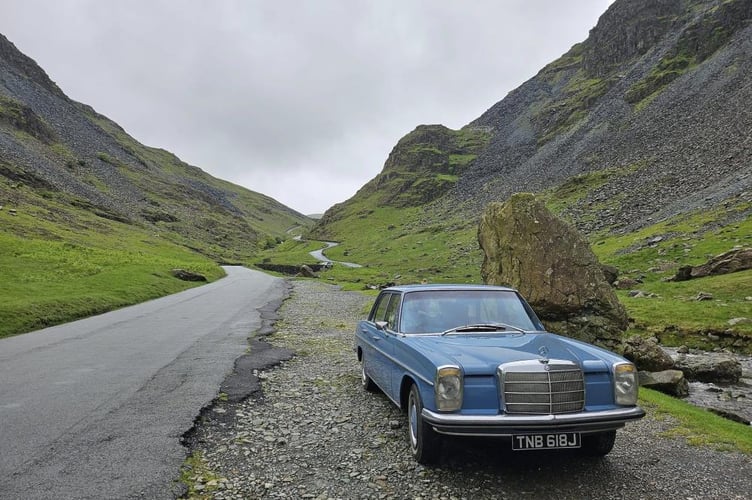
“We’ve seen cars head off on long road trips only to discover the spare tyre was 20-years old. A spare that’s perished could shred at the first sustained high-speed run.”
Depending on age and maintenance history, components like fuel pumps and water pumps can cause issues if they haven’t been replaced in the last decade. A spare fuel pump, in particular, is relatively easy to change at the roadside, but tricky to source quickly if you’re stranded.
If your brakes are properly serviced before departure, you shouldn’t need major components. Carrying a small bottle of brake fluid is sensible. In some cases, seals are smaller and lighter to carry than full wheel cylinders, although roadside brake rebuilds are beyond many owners’ mechanical comfort levels.
For Tim, the key message is ensure everything is in good condition before you leave.
Planning can be part of the adventure; working out your route, researching sights to see and looking up interesting accommodation and food stops.
“One top tip when planning your itinerary: don’t set unrealistic daily mileages,” he says. “What’s comfortable in an MGB may not be realistic in a 1929 Morris Minor.
“Necessary fuel stops also vary significantly between cars. A modern classic might do 300 miles on a tank, whereas an Austin 7 might need two or three stops in that distance.
“Remember too that Google Maps journey times are based on modern cars. If it says three hours, assume four in a 50- or 60-year-old car, particularly when crossing mountain passes. B-roads, rather than motorways, often make for the most memorable drives: winding lanes that reveal hidden villages, sudden viewpoints, or a snack stop offering local delicacies,” he says.
Depending on where you are heading, you may need to consider temperature. Driving around Milan in August at 40°C on black tarmac can be punishing. Queuing in heavy traffic with the cooling fan running may require turning the heater on to manage temperature – not always popular with passengers. If possible, you may want to drive in the morning and evening and find somewhere to relax in the heat of the day over a long lunch.
A flexible attitude and schedule can be useful. You might find a day longer than expected and choose to stop earlier. Apps now allow for booking accommodation on the go, making rigid pre-booked itineraries less necessary.
Fuel quality varies by country. Some countries offer higher octane fuel, but it may also contain higher ethanol content. Carburetted cars don’t automatically adjust for octane changes.
“If you normally run high-octane E5 in the UK, continue using the highest octane available abroad,” he says. “If you switch to lower octane and then climb altitude, you risk pinking and other issues.
“On long road trips, you’ll use the fuel quickly, so high ethanol content is less of a problem than when the car is sitting at home in a garage. But consistency helps maintain correct running.”
Legal requirements vary for each country, and you may cross borders on a longer European road trip. Requirements can include warning triangles, high-visibility vests, breathalysers, spare bulb kits and headlight beam deflectors.
And with a classic or indeed any car, international recovery is strongly recommended.
“Beyond scenic touring, many classic car enthusiasts enjoy pushing their vehicles in a controlled environment,” he tells Cambrian News. “Track days offer a safe setting to explore performance limits without risk from oncoming traffic. In the UK, groups such as MG’s on Track - a branch of the MG Car Club - provide tuition, clear rules, and the chance to experience a car at its best. These events are non-competitive. Faster drivers indicate intentions to overtake, and overtaking only occurs with permission.”
“Track use and motorsport will expose weak components in your car on things like brakes, ignition, cooling, more quickly than road use. This is not necessarily a negative. The ‘use it, break it, fix it’ cycle often results in a more robust and trustworthy car over time,” he says.
Not every owner wishes to compete or tour internationally. Joining your local classic car club offers a range of activities from scenic runs, pub lunches, informal social meets, trips to classic car shows and autojumbles.
Gatherings, whether large national car shows or intimate local meets, provide opportunity to connect with like-minded individuals, admire a variety of vehicles, and, quite simply, enjoy the world that old cars create.
“There is an enormous range of fun things you can do with a classic car. The key is not to leave it in the garage. Get out, explore, learn, and sometimes test its limits. Plan a road trip adventure with friends. Attend rallies, club events, and track days.
“Take the long route to the pub lunch, enjoy the conversation at a vintage show, and savour a weekend away with fellow enthusiasts. The car’s purpose is to be used, to create stories, and to reward the care and attention invested in it. Drive it. Enjoy it. Make memories,” Tim says.
Fellow enthusiast Stephen Owen has long been bitten by the classic bug.
“Unlike the bland sameness of modern car design, a classic car has its own unique character,” he says.
“Nostalgia is not what it used to be, and while I look back at my first car, a schoolboy owned Morris Minor van back in 1977, I can trace a passion for older cars that is still with me today.
“The love and feeling of freedom one discovers as a new driver, has never left me when driving a classic,” he says.
He drives a 1973 MGB.
“I am more in touch with my driving than in my modern, what some would call, everyday car.
“Cocooned in a modern car and insulated from the environment around you I think can have a detrimental effect of your awareness and therefore safety of the modern driver.
“I have always been attracted to cars and the different makes and models. On leaving college I bought my first MGB at the age of twenty-one and have owned three in my lifetime.
“The thrill of sitting in the cockpit and turning the key, just takes me into another world. The simple controls and basic layout have stood the test of time.
He uses his MG year-round and it performs faultlessly.
“A well-maintained classic car will serve you well. Only last year my wife and I drove to the Scottish Highlands and the south of France in our MGB GT with no problems,” he says.
Comments
We've recently changed our login process. If you have an account for commenting, you will need to re-register on the login window.
This article has no comments yet. Be the first to leave a comment.