

-Nick-Yallope-Peter-Nicolas-1.jpeg?width=752&height=500&crop=752:500)
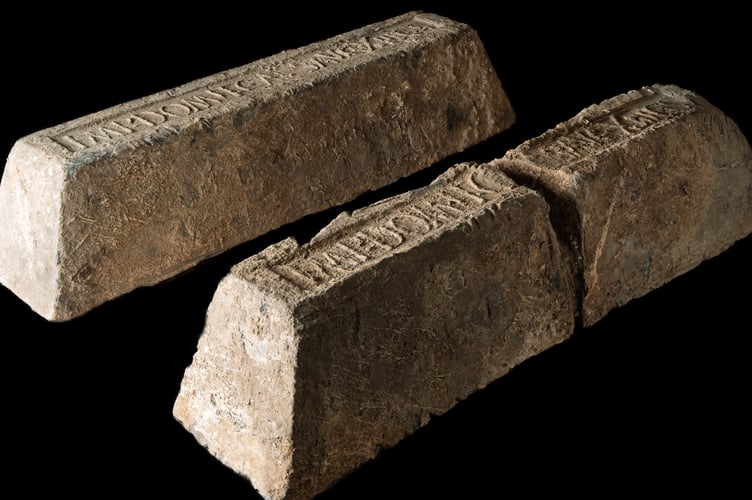
Two lead ingots found by metal detectorists in Ceredigion dating back almost 2,000 years have been declared treasure.
It is believed that the two ingots – commonly known as lead ‘pigs’ - found in the Llangynfelyn area of north Ceredigion, date back to AD87 based on lettering written on the ingots, which refers to the Emperor Domitian.
These two Roman lead pigs are the first of their kind to be found in west Wales, giving them historical significance. Furthermore, this gives solid evidence that the lead of the area was exploited in the Roman period and this was happening little more than a decade after the final conquest in the area in the mid AD 70s.
The treasure was found by Nick Yallope and Peter Nicolas who had been given permission to dig on the land by the landowner and were both more than happy with the find.




-Nick-Yallope-Peter-Nicolas-4.jpeg?width=752&height=500&crop=752:500)
Nick Yallope said: "I feel incredibly proud to have uncovered something so rare and important to our local heritage. Unlocking a new chapter of our area's past, is incredibly exciting."
Peter Nicolas added: "I’m just trying to save history for the local community and future generations. And I’ve always been very happy to donate my finds to the local museum for others to experience and enjoy."
The treasure was found on grazing land owned by local farmer Geraint Jenkins, at a depth of half a metre and less than two metres apart.
Geraint Jenkins said: "We were astonished when two local detectorists, Nick and Peter, who have permission to detect on our land, brought this discovery to our attention. Roman ingots are exceptionally rare and represent a tangible link to Wales’s Roman industrial past.
"Our priority is that the find is handled responsibly so its full historical, cultural, and intrinsic value is properly understood and recognised. It’s remarkable to think that land we now farm organically once played a role in a much wider Roman landscape."
Now that these finds have been declared as treasure the hope is that they can be put on display in a local museum for all to see.
Carrie Canham, Curator Amgueddfa Ceredigion Museum said: "We are very excited at the prospect of acquiring these remarkable objects.
“Ceredigion’s rich mineral and ore deposits were a major reason the Romans sought to conquer this area. Lead mined here travelled across the breadth of the Roman Empire, and these lead pigs highlight Ceredigion’s significance in Emperor Domitian Caesar Augustus’s empire building. We plan to share this story in our new archaeology gallery, opening in 2027, so the timing of this discovery could not be better."
Metal detectorists are advised that permission is needed before going on private land and that anything found believed to be treasure needs to be reported to the Portable Antiquities Scheme in Wales (PAS Cymru).
Any treasure found in Wales must be reported to a Finds Liaison Officer, external within 14 days of first finding it, or 14 days of realising an item might be treasure.
Those not reporting finding treasure can face a fine or be jailed.
Comments
We've recently changed our login process. If you have an account for commenting, you will need to re-register on the login window.
This article has no comments yet. Be the first to leave a comment.