
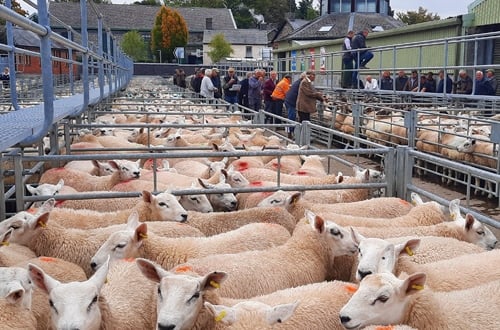
Welsh farmers have welcomed plans to remove costly post-Brexit checks on food exports to the European Union, but warned that the proposed agreement could leave producers following rules they have little power to influence.
Agricultural organisations and MPs across west Wales say the UK-EU sanitary and phytosanitary (SPS) agreement could bring significant relief to livestock farmers, processors and exporters, although reports suggest its benefits may not arrive until early 2028.
The agreement would align many British rules on animal and plant health, food safety and agricultural products with those of the EU, removing much of the paperwork introduced after Brexit.
For businesses exporting Welsh Lamb and Welsh Beef, one of the most immediate changes would be the removal of export health certificates, which can cost up to £200 per consignment. Routine inspections of many food products at the border would also end, although ordinary customs controls would remain.
The scale of Wales's reliance on European buyers is considerable. Welsh Government figures show food and drink exports were worth £839 million in 2024, with £634 million, or 76 percent, destined for the EU.
Meat and meat products accounted for £293 million of those exports, making them the country's largest food and drink export category.
A Commons Welsh Affairs Committee report last year found that, although the value of Welsh food and drink exports had risen since 2019, the volume sold abroad had fallen, suggesting higher prices had masked weaker trade flows.
Hybu Cig Cymru – Meat Promotion Wales (HCC) told the Cambrian News the measures would improve competitiveness in the industry's most important overseas market and could ultimately benefit farmers through the prices paid for their livestock.
An HCC spokesperson said: “Given that exports account for a significant segment of Welsh red meat sales and that export markets underpin farmgate prices, this is also good news for producers.”
The body said smaller processors had been particularly affected by certification requirements because larger companies generally had more staff and resources to absorb the administrative burden.




“Consequently, some businesses may be able to resume trading with the EU, while others may choose to start exporting,” it added.
The changes could also reduce delays and the risk of perishable goods spoiling while waiting for border clearance, HCC said.
On whether smoother two-way trade might expose Welsh farmers to tougher European competition, HCC pointed to the reputation of Welsh products and its 'Look for the Logo' campaign, which urges shoppers to choose certified Welsh Lamb and Welsh Beef.
However, the Farmers' Union of Wales (FUW), while welcoming closer alignment, raised questions about the long-term implications of accepting EU regulations without having a formal role in shaping them.
The union identified potential differences involving livestock transport, antimicrobial use, organic farming and rules governing vaccination against bovine tuberculosis. It wants clarity on how decisions could be reviewed or challenged if they caused problems for Welsh agriculture.
The FUW told the Cambrian News: “It is crucial to consider how an SPS agreement may place the UK in a challenging position in future,” warning that Britain would have to accept EU rules despite no longer being a member state.
It called for a full economic assessment before the terms are agreed, alongside a clear explanation of the legislation needed to put the new system into effect.
The union also warned that some of the costs caused by Brexit remain significant. It cited a 21 percent fall in UK agri-food exports between 2018 and 2024 and stressed that Welsh farms depend on European imports of fertilisers and animal feed ingredients as well as overseas sales.
In an earlier statement, Alan Gardner, chairman of the FUW's rural affairs committee, said Welsh producers must not be disadvantaged by unintended consequences or reduced influence over future standards.
Defra has acknowledged that businesses will need to adapt to changes in areas including food labelling, animal health, pesticides and organic production. Its published guidance says some UK rules would be replaced rather than supplemented, and that exceptions intended to protect animal welfare and public health remain part of negotiations.
For Ceredigion Preseli MP Ben Lake, the proposed deal represents overdue relief for rural businesses which have faced higher costs and delays since the UK left the EU.
The Plaid Cymru MP said: “I welcome this agreement as a step towards repairing some of the damage Brexit has done to Welsh farmers, food producers and exporters.”
He said agriculture was central to the economy and communities of Ceredigion Preseli, while new trading barriers had also hurt Fishguard, one of the principal Welsh routes to Ireland.
Evidence submitted to a Senedd committee last year suggested freight volumes through Fishguard and Pembroke combined had remained at around 60 to 70 percent of their pre-Brexit levels, as some trade switched to other routes.
However, that port comparison cannot by itself establish how much of the decline resulted from SPS checks, or how much traffic a new agreement could bring back.
Mr Lake argued that the UK Government should go further than the SPS agreement and consider closer integration through a customs union, the single market and ultimately renewed EU membership.
“The UK Government should be more ambitious,” he said, urging ministers to remove further barriers and give the Welsh Government a meaningful say in decisions affecting farming and ports.
Labour's Steve Witherden, MP for Montgomeryshire and Glyndŵr, offered a more enthusiastic endorsement of the Government's approach, saying the removal of certificates, fees and checks would be a major gain for agricultural exporters.
“A whopping three-quarters of food and drink exports in Wales go straight to the continent, so a draft deal that gets rid of certificates, fees, and other import/export checks with our biggest trading partner ... is a major win for Welsh farmers,” he said.
Mr Witherden acknowledged implementation could take time but backed the Prime Minister's ambition to strengthen ties with Europe, describing access to nearby export markets as essential to supporting agriculture.
The Government has estimated that an SPS agreement could add up to £5.1 billion annually to the UK economy. Ministers have also pointed to the removal of restrictions on products such as fresh sausages, burgers and certain shellfish as potential benefits.
But the timetable has become a major source of frustration. Although Defra's existing business guidance had envisaged implementation in mid-2027, reports last week suggested the agreement might not take effect until the first quarter of 2028.
In a parliamentary answer on 28 October, Defra said negotiations were at an advanced stage and that ministers intended to conclude the agreement before the UK-EU summit on 20 November. It said implementation dates would be announced in due course.
HCC said such a delay could create uncertainty for exporters planning investment, future sales and trade development, even if the agreement remained strategically important.
Mr Lake said farmers would be understandably frustrated if the benefits were not fully delivered until 2028, while the FUW urged the Government to avoid a last-minute transition that left businesses unprepared.
For Welsh producers, the question is therefore not simply how much trade could become easier, but when the savings will start and what obligations will accompany them.
The Department for Environment, Food and Rural Affairs was approached for comment but had not responded at the time of writing.
Comments
We've recently changed our login process. If you have an account for commenting, you will need to re-register on the login window.
This article has no comments yet. Be the first to leave a comment.