
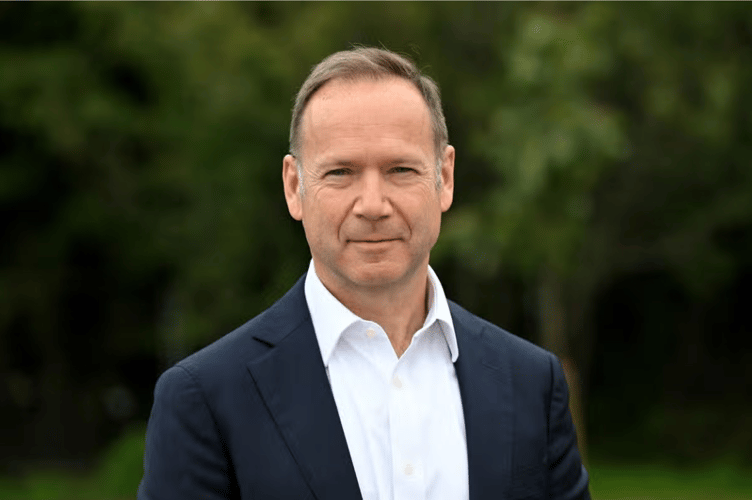
The chief executive of Dŵr Cymru, Welsh Water has acknowledged that the company's environmental performance "needs to improve" as a £20 million rebuilding project at Cardigan's wastewater treatment works nears completion.
Roch Cheroux said the scheme, part of a wider £68 million investment programme for the River Teifi, should improve water quality, but accepted public confidence would depend on visible results.
His comments follow the publication of figures by Natural Resources Wales (NRW) showing serious pollution incidents involving Welsh Water increased from six in 2024 to nine in 2025, despite overall wastewater pollution incidents falling from 132 to 107.
NRW said the company still required improvement and raised concerns about the pace of environmental progress.
Across Wales, almost a third of monitored storm overflows spilled between 40 and 99 times in 2025, while more than one in ten spilled over 100 times.
In an article submitted to the Cambrian News, Mr Cheroux said: "We also recognise that confidence in our plans must be earned through results. Our environmental performance needs to improve, and customers rightly expect to see sustained progress."
He added that investment funded by customers must translate into better services and a healthier environment.
At Cardigan, the new treatment works is designed to cope better with seawater entering the system from the tidal Teifi, reducing the need for storm overflow discharges.
Elsewhere in Ceredigion, the company says work at Llanfarian will increase wastewater treatment capacity and reduce spills, while upgrades have also been made at Aberystwyth wastewater treatment works.
Further improvements are planned at Dyffryn Ardudwy and Machynlleth, alongside approximately £7.5 million investment at Pontrhydfendigaid to help protect the Teifi.




Across Wales, Dŵr Cymru plans to spend £2.5 billion on environmental improvements between 2025 and 2030, including £889 million to reduce the impact of storm overflows.
Mr Cheroux explained that much of Wales's sewer network carries both wastewater and rainwater. During heavy rainfall, overflows can prevent sewage backing up into homes, schools and businesses when pipes reach capacity.
However, he acknowledged that discharges contain untreated wastewater and can damage the environment. "Their role in protecting properties does not lessen our responsibility to reduce their use and impact," he said.
The CEO also stressed that river health is affected by agricultural runoff, urban drainage, industrial discharges, misconnected drains and poorly maintained septic tanks.
"Our responsibility is to put our own performance right and work with others to achieve the wider improvements these rivers need," he said.
More than 6,000 customers have already contributed to Dŵr Cymru's consultation on its strategy for the next 25 years, according to the company.
As a not-for-profit company with no shareholders, Dŵr Cymru says its plans are shaped by the communities relying on its services.
The CEO added: “We want Cambrian News readers to help shape those choices. Tell us what matters most in your community, where you want to see improvements and what you expect from Welsh Water in the years ahead.”
Mr Cheroux invited residents to share their priorities through the consultation at dwrcymruplans.com/our-strategy-for-the-future.
Comments
We've recently changed our login process. If you have an account for commenting, you will need to re-register on the login window.
This article has no comments yet. Be the first to leave a comment.