
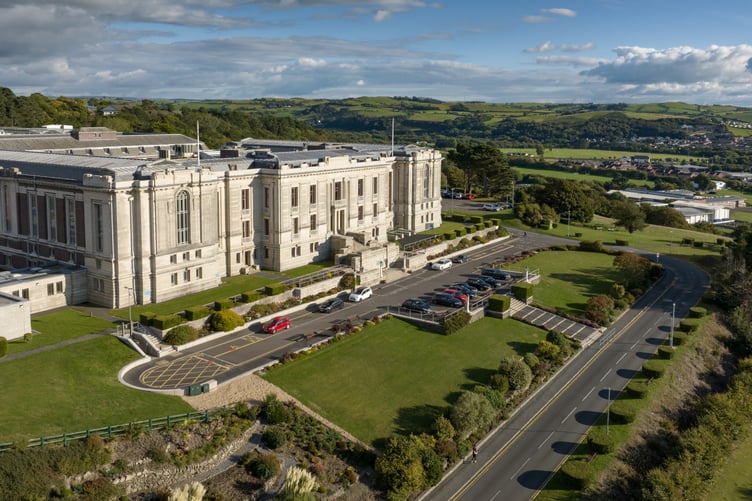
Funding cuts have left the National Library of Wales with fewer staff and a backlog of historic collections that are harder for researchers to access, its chief executive has told the Senedd.
Rhodri Llwyd Morgan, who leads the Aberystwyth institution, acknowledged the continuing consequences of reduced funding during an appearance before the Senedd's Culture, Communications, Welsh Language and Sport Committee on 19 October.
He revealed that employee numbers had fallen from approximately 240 to 200 during a difficult period for the organisation. Despite efforts to stabilise its operations, staffing levels have not recovered. The reductions followed a 10 percent cut in core funding, which forced the institution to reorganise services and respond to increasing financial pressure. Mr Morgan told committee members that losing experienced colleagues had created challenges for remaining employees, who were required to maintain services with fewer resources. He acknowledged continuing concerns about workload in some departments and said the institution needed to improve communication between management and staff.
Mr Morgan acknowledged that years of underinvestment had affected its ability to catalogue newly acquired material.
The library preserves documents, manuscripts, books, photographs and recordings of national historical significance. However, limitations on staffing and resources mean some collections cannot be described in the detail normally expected. Consequently, although the material remains available, researchers can face greater difficulty identifying relevant documents.
Mr Morgan explained that the library had adopted a compromise allowing collections to be entered into its catalogue more quickly, but with less comprehensive descriptions. He attributed the difficulties partly to the reduction in government funding and the continuing pressure on available resources.
The institution is attempting to address the backlog through volunteer involvement, including assistance with cataloguing and digital transcription. Mr Morgan highlighted the transcription of the 1923–24 Welsh women's peace petition as an example of successful volunteer participation. The project involved volunteers in Aberystwyth and internationally working with records documenting 390,296 signatures.
Despite the financial constraints, the chief executive insisted that the library had maintained its public-facing services. Opening hours have not been reduced, while the institution continues to provide access to its collections and facilities. He also told MSs that the library was exceeding its public satisfaction target, reporting a 98 percent satisfaction rate against a target of 96 percent.
Alongside efforts to manage costs, the institution is seeking to increase commercial income. Mr Morgan revealed a target of approximately £700,000 from activities including its café, shop, venue hire, digitisation and specialist conservation services.
The library is also developing commercial partnerships involving its historic collections. Committee members heard that approximately 250,000 digitised documents were being shared with genealogy company Ancestry, generating income for the institution.



Library president Ashok Ahir explained that the arrangement provides time-limited access through the commercial platform before material becomes publicly available.
While those initiatives offer additional revenue, the committee evidence underlined the continuing challenge of protecting Wales's national collections while operating with fewer staff.
Mr Morgan maintained that the library remained committed to preserving its collections and ensuring they could be accessed by future generations.
Comments
We've recently changed our login process. If you have an account for commenting, you will need to re-register on the login window.
This article has no comments yet. Be the first to leave a comment.