
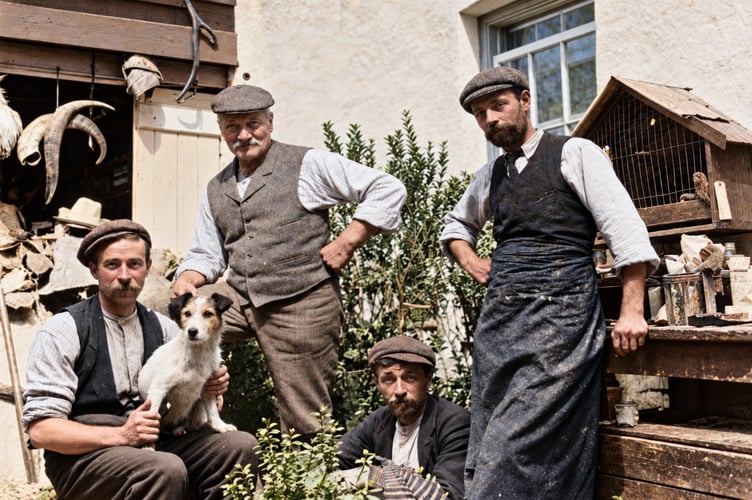
In the 1860s, James Hutchings, a young gardener from Devon, began practising taxidermy in Aberystwyth. What started as a hobby would grow into one of Britain's most prolific taxidermy businesses, with work travelling across the world and a reputation that has survived for more than a century.
It was quite an achievement for a family working from a modest shop in a Welsh small seaside town.
James established his business at 7 King Street, where he preserved and mounted birds and animals for local customers. As his reputation grew, so did the orders. Foxes, badgers, otters and seabirds were arranged in glass cases, often surrounded by carefully constructed rocks, grasses and branches. Some were familiar creatures from the Cardiganshire countryside, while others came from much further afield.
In 1866, James married Rhoda Stevens, and as their children grew older, the business became a family enterprise. Their sons, Fred, George and Walter, followed their father into taxidermy, while their daughters helped paint the delicate backgrounds that became a feature of Hutchings' work.
By around 1892, the family had moved to premises at 9 Bridge Street, and their reputation was spreading far beyond Aberystwyth.
Among their customers were wealthy collectors and members of the aristocracy. Orders reportedly arrived from as far away as New York, Sydney and India. From their workshop in Aberystwyth, the Hutchings family had built a name recognised by collectors thousands of miles away.
One remarkable surviving example is a tiger shot in India in 1903. Its head and forepaws were mounted by Hutchings and are now preserved in the collections of Aberystwyth University.
Yet alongside such extraordinary commissions, the family continued their everyday work for local customers. Whether the customer wanted a treasured specimen preserved or simply something unusual for the parlour, the same family craftsmanship went into the finished display.
James and Rhoda both died in 1929, within weeks of one another, but the business they had built together continued in the hands of their children until 1942.


Today, original Hutchings cases are still treasured by collectors, with their distinctive black frames, gilded decoration and carefully arranged animals. Some of the finer examples fetch considerable sums. Many have survived in private homes, historic houses and museums, including Ceredigion Museum, where the work of this talented Aberystwyth family can still be seen and appreciated.
Taxidermy was fashionable in Victorian and Edwardian homes, although tastes have changed considerably since then. Yet the work of the Hutchings family remains admired and collected, long after their shop closed its doors. Somewhere, perhaps thousands of miles from King Street, one of their distinctive black-and-gold cases still takes pride of place, preserving the craftsmanship and reputation of a remarkable Aberystwyth family.
Comments
We've recently changed our login process. If you have an account for commenting, you will need to re-register on the login window.
This article has no comments yet. Be the first to leave a comment.