
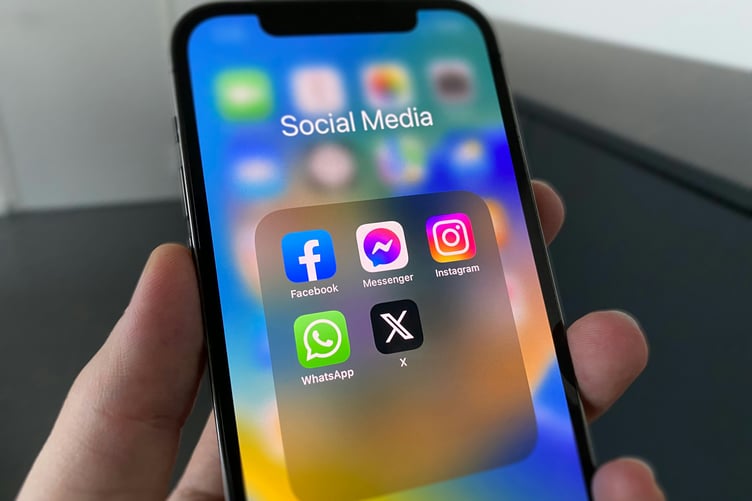
An upcoming ban on under 16s accessing “high risk” social media platforms, is an ‘important’ step for online safety, Public Health Wales has said, as figures reveal that half of 10 to 11 years old in Wales report using social media websites and apps regularly.
The UK Government has announced its intention to ban social media for under 16s from Spring next year.
It followed a national consultation from March to May which showed “overwhelming public demand for action.”
With fresh Wales figures showing that children not even out of primary school are regularly using social media, the move has been welcomed by Public Health Wales.
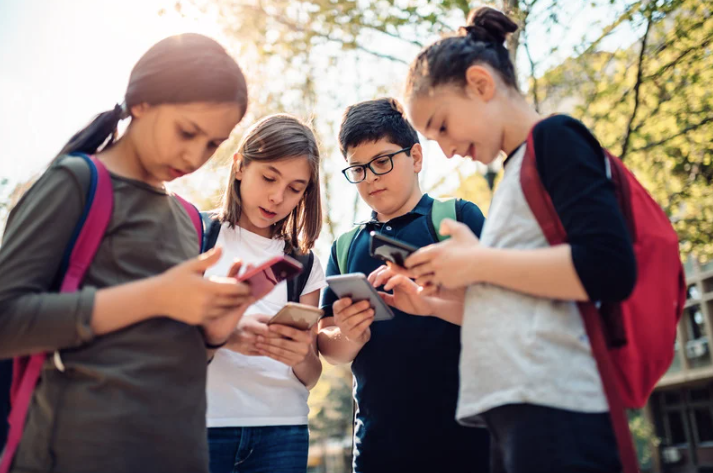
The first publication of The Schools Health Research Network (SHRN) primary school data dashboard, analysed by Public Health Wales, shows that more than half (53.3 per cent) of girls in year six of primary schools – those aged 10 and 11 – report using social media websites and apps regularly, along with 49.7 per cent of boys the same age.
In addition, three quarters of children this age own smartphones.
The data, which comes from the SHRN Student Health and Well-being Survey in Primary Schools carried out by Cardiff University, shows that there is a steady increase in the regular use of social media sites through primary school, with 20.4 per cent of boys and 18.6 per cent of girls using them in year three, rising each year as children progress through primary school.
The survey also showed that more primary school children own smartphones as they get older, with around 39 per cent of children in year three (seven to eight years old) owning a smartphone to more than three-quarters in year six (75 per cent of boys and 77.2 per cent of girls).
It shows a steady growth through the primary school years of smartphone ownership, with around 47 per cent of year four children owning the devices, and 58-60 per cent in year five.
The survey asked children if they have accessed social media sites such as Instagram, Tiktok, Snapchat or Facebook, and if they did how often they tended to access them each week.




Most major social media platforms set a minimum age of 13 for users.
Lorna Bennett, Consultant in Public Health (Educational Settings) for Public Health Wales, said: “The level of social media use at such a young age indicated by the SHRN survey is a potential concern as there’s evidence that social media use can be associated with negative impacts on mental health for some children.
“Regular exposure to social media websites and apps can have a negative impact on young people.
“Frequent engagement can heighten perceived social pressures and social comparisons which can negatively affect well-being and body image.
“Being on social media sites carries the risk of exposure to harmful content and inappropriate contact with adults, and young children are less able to discern what is appropriate contact or assess potential risks.
“Exposure to addictive features, such as infinite scrolling, that can extend the time children are on apps, taking them away from other activities, such as physical activity or other hobbies and interests.
“There are also growing concerns that addictive features may influence brain development and behaviours such as impulse control and attention spans.
“In addition, it carries the risk of being exposed to inappropriate advertising and content not designed for their age group.
“Everything that they share, post or engage with online will be available forever, and can be used to create digital profiles that will stay with them for life, potentially causing issues in the future.
“Given the level of smartphone ownership among children and young people in Wales, the announcement of an upcoming ban on under 16s accessing high risk social media platforms, and restrictions on older teens accessing platforms late at night, are important steps in ensuring children and young people continue to benefit from technology whilst being kept safe online.
“We would advise parents and carers to carefully monitor and restrict social media use among young children according to platform restrictions, and to ensure that children experience a range of different activities outside of school time.”
The ban is part of an international trend of governments restricting who can access social media.
The UK Government plan to use the same model for a social media ban as Australia, which included platforms like Instagram, YouTube, TikTok, Snapchat, Facebook and X.
The ban will be backed by stronger requirements for age checks on platforms.
Tech companies including Meta, Snapchat and YouTube warned a blanket ban would move children into more unsafe online environments, but Prime Minister Keir Starmer – who announced his decision to resign last week – said when launching the initiative that he was “not prepared to compromise on the safety and happiness of our children, and that is why this ban must happen, and why this ban will happen.”
In January Ceredigion County Council advised parents not to give their children smartphones before the age of 14 by backing the Smartphone Free Childhood campaign.
Laurie Hughes, Ceredigion County Council’s Senior Advisory Teacher for Wellbeing, said: “We want to give children the best possible chance to thrive, free from the pressure of constant connectivity and potential harm.
“Mobile phones and social media have been a hot topic for some time, and we are starting to see shifts in attitudes and culture locally, nationally, and globally.”
Powys council’s cabinet member for adult social care Cllr Peter Roberts said that “various departments will be looking at this [the planned ban] as more guidance emerges from the UK and Welsh Governments.”
Joe Ryrie, co-founder of the Smartphone Free Childhood campaign group, said the ban “won't solve every problem overnight, but it is a major step forward” adding that “millions of children will now get a few more years to grow up before entering online environments that were never designed with their wellbeing in mind.”
The pushback against children using smartphones and social media has led to the Welsh Government announcing its plans to issue statutory guidance to schools on restricting the use of mobile phones.
A survey found a large majority of respondents wanted greater national direction on phone use in schools.
The guidance for local authorities and schools will “strengthen and make clear the expectations for how phones are used within the school day,” the Welsh Government said.
Cabinet Minister for Education and Welsh Language, Anna Brychan said: “I fully support – and strongly encourage – headteachers to introduce clear and robust restrictions on mobile phone use during the school day, up to and including a full restriction across the school site.
“The UK Government has announced plans for new restrictions on under 16s access to social media.
“We are committed to protecting young people online, and will carefully assess the implications of this announcement.
“We will work with school leaders and partners across the education system in Wales to ensure that their voices are heard and needs are reflected as new restrictions are taken forward.”
The Children’s Commissioner for Wales, Rocio Cifuentes, however, criticised the UK Government's proposed social media ban for under-16s, calling it “too simplistic”.
“Proposals such as a blanket ban on social media for children risk missing the underlying issues.
“They focus on children’s access, rather than on the safety of the systems children are being asked to navigate.
“Instead, we believe there needs to be a fundamental shift in where responsibility sits.
“Children, parents and schools are too often expected to manage risks that are built into the design of digital platforms.
“This is neither fair nor effective.
“Technology companies must take far greater responsibility for the safety of the environments they create.
“Access to child users should not be automatic, it should be conditional and earned by demonstrating that platforms are safe, age-appropriate and designed with children’s wellbeing at their core.”
New polling for the Institute for Public Policy Research (IPPR) conducted by YouGov showed that around eight in 10 people support either banning under-16s from social media or forcing social media companies to remove features and content deemed inappropriate for children.
While 44 per cent of the public prefer a ban and 39 per cent prefer tighter regulation, parents of children under 16 included in the poll favour banning social media ban over regulation by three to two (54 per cent to 36 per cent).
Only 11 per cent of adults, and 7 per cent of parents with children under 16, say social media should not be banned or regulated in this way.
When it comes to deciding which social media platforms are appropriate for children, around half of adults trust parents (51 per cent) or an independent regulator (49 per cent) to make the decision.
By contrast, only a fifth trust schools (22 per cent), one in six trust technology companies (16 per cent), and just one in seven trust government ministers (15 per cent).
IPPR argues that social media platforms should be assessed and restricted based on the features they use.
When asked to identify the most harmful features of social media for young people, more than two thirds of adults (69 per cent) chose exposure to age-inappropriate content, such as nudity, more than half (57 per cent) chose exposure to strangers, and more than a third (36 per cent) chose algorithms learning user behaviour and recommending content.
Other features, including constant scrolling news feeds, direct messaging, AI filters and like counts, were each selected by around one in five people or fewer.
Despite this, the IPPR is calling for and backing a blanket ban on social media for under 16s, arguing that the debate must move beyond harmful content alone.
It says that the interaction between platform features and critical stages of child and adolescent development is “swallowing up childhood.”
Young people's identities are increasingly shaped by the rise and fall of likes, followers and Snapchat streaks, while every joke, insecurity and mistake can be documented, judged and shared, fuelling rising anxiety.
The researchers say claims that a ban would be paternalistic, or an attack on personal freedom, ignore the reality of existing protections for children. The UK already prohibits children from gambling, drinking alcohol and driving, they note. They argue there is nothing liberating about exposing young people to algorithms designed to capture, retain and monetise their attention.
Avnee Morjaria, associate director at IPPR, and former teacher, said: “Having spent years teaching in secondary schools, I saw first-hand how childhood has changed.
“More and more of children’s lives are now lived through screens.
“Previous generations had the freedom to make mistakes, experiment and move on.
“Today’s children are growing up under constant scrutiny, where every insecurity can be amplified and every mistake permanently recorded.
“A blanket social media ban for under-16s is the only effective option.
“Not because technology is inherently bad, but because we are allowing childhood itself to be shaped for the worse by algorithms.
“Childhood should be defined by real-world experiences, friendships and opportunities to grow, not by an endless competition for attention and approval.
“The greatest loss of the smartphone age is not privacy; it’s childhood itself.”
While the plan has been welcomed, some have argued that it is not the Government’s job to stop children from using social media.
Dr Christopher Snowdon of the Institute of Economic Affairs said: "We must stop judging new legislation by the good intentions of its advocates rather than its likely consequences.
“We know from Australia that most teenagers will get around the ban and that those who are not able to do so will suffer from social isolation.
“There are legitimate concerns about screen addiction among both children and adults, but parents are already able to restrict what their children see online and limit the number of hours they can use a smartphone.
“These guardrails are removed when kids log in via VPNs or sign up to platforms as adults.
"What the government is trying to do is reminiscent of attempts to ban the printing press.
“It is similarly impractical, illiberal and ultimately undesirable."
Comments
We've recently changed our login process. If you have an account for commenting, you will need to re-register on the login window.
This article has no comments yet. Be the first to leave a comment.